KnowAIData covers the AI industry’s biggest news, tool launches, and research breakthroughs — written clearly for readers who want to stay ahead without the hype.

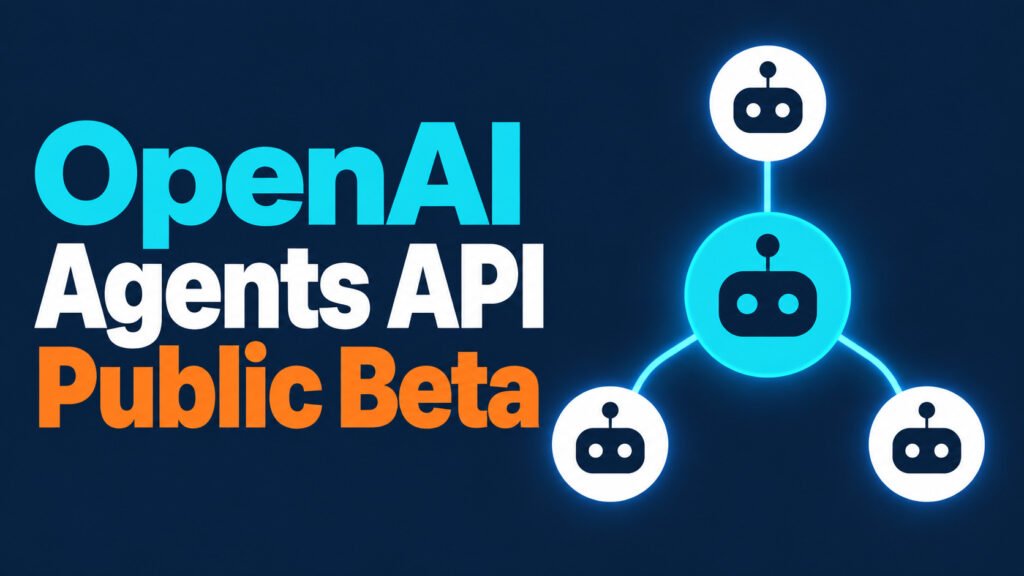
OpenAI opened its Agents API to all developers in public beta on September 10, giving them programmatic access to the same orchestration infrastructure that has powered its Codex coding agent — packaged into a single API call.
There are no additional fees for using the Agents API — developers simply pay for the tokens and tools their agents consume, as outlined on OpenAI’s pricing page. That pricing structure removes one of the key friction points that previously pushed teams toward building their own agent infrastructure from scratch.
OpenAI described the Agents API as bringing the same harness and infrastructure that powers Codex to developers through a simple, flexible API. The API is live in public beta today for all API customers, with general availability to follow after an iteration period based on developer feedback.
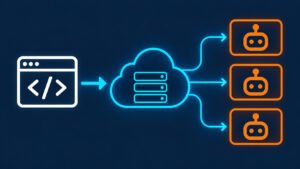
OpenAI hosts and maintains the harness. Developers choose the agent’s compute environment: an OpenAI-managed sandbox, their own infrastructure, or one of OpenAI’s sandbox partners.
Ecosystem partners offering first-class integrations include Blaxel, Cloudflare, Daytona, DigitalOcean, E2B, Modal, Oracle, Runloop, and Vercel — covering a range of CPU, GPU, memory, cold-start, and cost configurations.
The Agents API lets developers create a production-ready agent in a single API call by specifying the task, model, tools, and environment. Three core capabilities differentiate it from existing DIY orchestration setups:
Context compaction: The API automatically compacts earlier context as a session approaches its limit, preserving information the agent needs to continue — removing the need for developers to implement their own compaction logic.
Tool search and programmatic tool calling: The API loads relevant tool definitions as needed to reduce token usage and cost, and lets agents run tool calls in parallel, chain related operations, and filter results in code — bringing only the relevant output back into context. It supports MCP, custom functions, and built-in tools like web search.
Multi-agent (subagent) support: The API can break complex tasks into independent pieces and delegate them to subagents that work in parallel. Each subagent maintains its own context, while the main agent coordinates their work and consolidates results.
The API is powered by the open-source Codex harness, giving developers visibility into the core orchestration logic through OpenAI’s public codebase on GitHub.
Developers building production AI agents previously had to manage session persistence, context overflow, tool routing, and subagent coordination themselves — or rely on third-party frameworks with their own overhead. The Agents API offloads all of that to OpenAI’s managed infrastructure.
Early adopters reported concrete gains in testing. One customer, SafetyKit, reported a 60% reduction in cost per case after migrating their review workflow to the Agents API, alongside lower latency and improved token efficiency. Another, Hypha, said they reduced failed agent responses by 86% by separating the agent harness from the sandbox.
For teams running large-scale agent deployments, Dwelly’s CTO noted that the API handled bursty workloads by fanning out work across hundreds of agents asynchronously, without keeping infrastructure idle between peaks.
OpenAI says it will iterate quickly on the Agents API during the public beta based on developer feedback, with the goal of reaching general availability. No specific timeline for GA has been confirmed.
The company has not publicly stated when the Agents API will be integrated with ChatGPT for Work or other consumer-facing products, or whether current Codex users will be automatically migrated to the API-based architecture.
KnowAIData covers the AI industry’s biggest news, tool launches, and research breakthroughs — written clearly for readers who want to stay ahead without the hype.